The Psychologist Friend Gives Up a Career in Fiction
The FriendThe Psychologist Friend Gives Up a Career in Fiction traces a change in vocation rather than a complete renunciation of writing. After early literary success, the psychologist friend came to see the ambition and competition required by a writing career as incompatible with Buddhist practice. She stopped pursuing a novel and a public literary identity, but kept writing privately and turned toward work in which writing could serve others without becoming a career or a contest.
Early Success and a Change in Practice
Not long after college, the friend published short stories in small but prestigious literary quarterlies. One story won a prize, and later that year she received a larger annual award for promising young writers. The narrator’s question about why she stopped writing follows this record of recognition: the change did not come after a failure to publish, but while a literary future seemed possible.
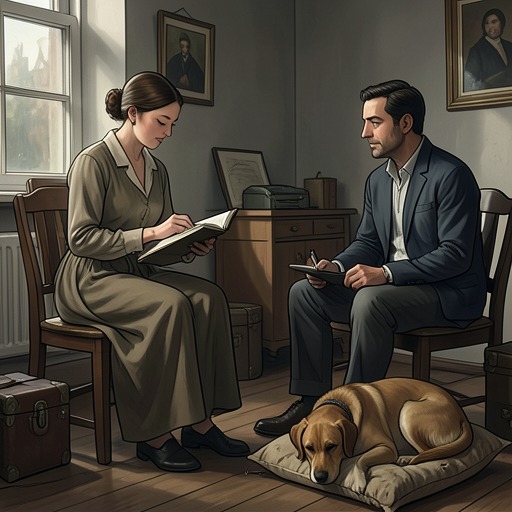
The friend described the transition as gradual rather than a deliberate decision to quit. While struggling to concentrate on a novel, she followed someone’s suggestion to try meditation. A month-long retreat upstate introduced her to Buddhism, and she continued meditating afterward. She did not abandon writing altogether: she regarded journaling as a form of meditation and continued composing poetry.
That poetry served a different purpose from the fiction she had hoped to publish. The disturbing realities she encountered at work influenced her need to write, but she said her poems were not about the job. Instead, they turned toward nature and the beauty of the world. She considered the poems private and had no desire to share them; writing them was, in her account, like prayer, something that did not require an audience.
The Novel, Ambition, and Competition
The friend did not intend to withdraw from the world or become a Buddhist nun. Her difficulty was reconciling a literary career with the Buddhist goal of freedom from attachment. After her retreat, she attended an artists’ colony hoping to regain momentum on the novel. Watching writers at different stages of their careers, she concluded that success demanded more than talent: it required serious ambition, a drive to surpass earlier work, and conviction that one’s own work was exceptionally important. These demands seemed to pull against learning to sit still and let go.
The residency also made the competitive culture of literary life hard for her to ignore. Although writing was not supposed to be a competition, she saw writers behaving as if it were. One resident received an advance so large that it was reported in the Times; at dinner, he joked that his success had cost him his remaining friends. The narrator’s broader recollection of writers’ frustration over who was published, rewarded, or excluded adds to the atmosphere in which the friend was reconsidering her ambitions. Literary success appeared to invite not only admiration but efforts to diminish the successful writer.
Her doubts sharpened while she was still struggling with the novel. She asked herself whether the world needed another book when so many people were already publishing novels, and whether a life spent on a project that would not be missed was justifiable. Around the same time, she heard a writer on the radio suggest that if no fiction appeared for a year, the world would scarcely change, apart from the economic effects. She took the argument personally and understood it as a reason to alter her life. The decision brought regret: at times she felt like a quitter who lacked the courage or discipline to realize her earlier dream.
A Different Relationship to Writing
The friend also understood her departure through a change in her own reading. Once a passionate reader, she became increasingly uninterested in fiction, perhaps in part because of the realities she saw in her daily work. Stories about invented people and invented troubles began to feel remote. She bought books widely praised as masterpieces or major national novels, but often left them unfinished; even the ones she completed soon slipped from memory. Eventually she stopped reading fiction and found that she did not miss it.
When the narrator asked whether she would have lost interest in fiction even if she had continued writing it, the friend could not say. She did say that she was much happier in her present life than she would have been in the narrator’s. That answer gives the change its clearest outcome: the lost career remained a source of occasional regret, but not, in her view, a life she wished to reclaim.
Writing in Her Psychological Work
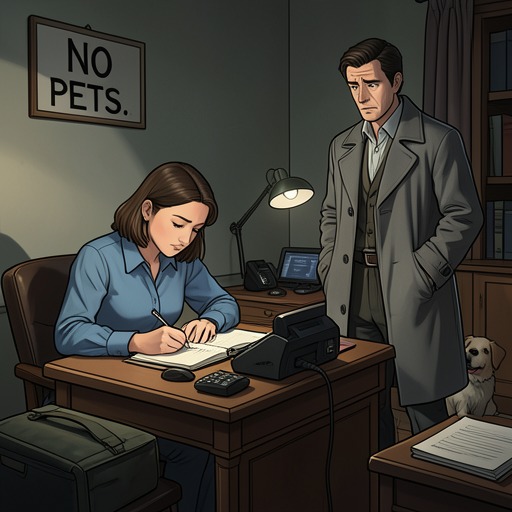
The friend’s continuing work with writing took place in a very different setting. At a center serving women affected by trafficking, she encouraged participants to keep journals, assuring them that the writing was private and that she herself would not read it. Those for whom English was a second language could write in their native languages. Participants developed their own ways of handling the journals: some kept them close, some hid them, and some destroyed their writing soon after making it. The friend accepted these different practices, as well as the choice not to journal.
She also wanted to create a safe workshop for women who had taken readily to journaling, including some who wrote for much longer than fifteen minutes a day. Participants could share writing with one another and an instructor. Although many worried about their English, especially spelling and grammar, the friend instructed the narrator to ignore those errors rather than risk worsening the writers’ already fragile confidence. The workshop’s purpose was not literary polish or professional advancement; it was to let participants write and share without making correctness another barrier.
The work made the limits and stakes of expression visible. The friend described participants whose histories of harm predated trafficking, and said that some spoke of death as the best outcome they could imagine. She showed the narrator artwork and played recordings of testimony; she also described a fourteen-year-old survivor who had become unable to speak despite no identified problem with her vocal organs. The friend understood mutism, blindness, and paralysis as psychosomatic symptoms that could occur in response to trauma. These accounts establish the seriousness of the work without implying that journaling or a workshop could undo what the women had experienced.
The narrator had promised not to use anything the women wrote, while the friend agreed that the narrator could write about her and her work. That distinction connects the friend’s professional practice to her changed understanding of writing: she did not make the participants’ private words material for a literary career, and she continued to write for herself without seeking an audience. Her decision therefore marks not the end of writing, but a redirection away from literary ambition and toward private practice and carefully bounded opportunities for others to speak.